Monday, October 8, 2018

Ada Byron Lovelace and the Thinking Machine

Title: Ada Byron Lovelace and the Thinking Machine
Author: Laurie Wallmark
Illustrator: April Chu
Publisher: Creston Books
Copyright: October 13, 2015
ISBN: 978-1939547200
Age Range: K-3 (5-8 years-old)
Reading Level: AR 4.6
Cost: $16.68
Pages: 40


Awards/Recognition: 
Booklist Top Ten Books in Science and Health
Booklist Editor's Choice: Books for Youth 2015
National Science Teachers Association Outstanding Science Trade Book
California Reading Association Eureka Gold Medal Winner
Cook Prize Honor
2016 Amelia Bloomer List
Assoc. of Childrens Librarians of Northern California Outstanding Book
Junior Library Guild Selection
Outstanding Merit, Bank Street Best Children's Books 2016
Patterson Prize Winner 
Society of Illustrators, Original Art Show 2016
ILA-CBC Children's Choices Reading List

SUMMARY: Ada Byron Lovelace, the daughter of famous poet Lord Byron and her mathematician mother (Princess of Parallelograms), is known as the first person to write a computer program.  This biography explores Ada's childhood, her struggles overcoming blindness and paralysis from a childhood disease, and her rise to becoming the first person to write a computer program.  At a time, 1800's, when women were "not encouraged" to do math and science Ada's mother hired female tutors specifically to teach such skills to Ada.  Ada was always thinking of inventions and loved numbers.  This biography reads like narrative nonfiction and introduces readers to STEM concepts from the 1800's.  


CRITIQUE: The title amazingly received starred reviews from Booklist, Kirkus, Publishers Weekly, and School Library Journal. The illustrations are highly detailed and the writing doesn't just throw facts at you.  After this title was published two more biographies about Ada Lovelace were published.  This title is pro-women in science, and encourages little girls to start inventing early.  What I love is the knowledge that computing devices were in the works long before one even imagined.  Ada's mother was a strong independent knowledgeable woman and Ada followed in her footsteps.  The drama with Ada's father was previously unknown to myself, and made me want to research more. Kirkus sums up the story the best,  "a splendidly inspiring introduction to an unjustly overlooked woman."--Kirkus


FEATURES INCLUDED: The author includes notes at the end of the book, a section on "The World's First Computer Program," a fun section on Ada's nicknames, a timeline, and bibliography.  


EXAMPLES:


The illustrator uses full page spreads to draw the reader into the space.  Here you get the background of Ada's famous father and her mathematician mother. Just look at those paintings in the background! 


In this illustration you are introduced to an early computing machine, and Ada's ideas for using the machine.  The pages are not overwhelmed with words, and the illustrations follow the story.


Throughout the book the use of perspective (you are looking through a window) and impeccable details makes the illustrations jump off the page.  Ada's kitty makes an appearance on most pages. In this book the illustrations are just as important as the words.


COMPARISONS/RECOMMENDED READING:


Ada Lovelace, Poet of Science: The First Computer Programmer by Diane Stanley also explores the famous computer programmer.  This title was an ALA Notable book and received a starred review from Booklist. This biography takes a more whimsical approach to the illustrations.  Again touching on the same topic Stanley focuses more on Ada's parents relationship and drama than the other two biographies.  This title would be considered more fanciful.  This title is listed for preschool-3, and the preview titles are listed for a little older audience.  


This book talk explores a comparison title Ada's  Ideas: The Story of Ada Lovelace, the World's  First Computer Programmer While the content  may be similar, the illustrations are very  different from the title above.  This title appears  to focus more on Ada's ideas (inventions) as  opposed to just computing. It is not that one title is inherently better than the other, but having  students compare the titles for accuracy, content, and illustrations would add to the learning  experience.   


SUGGESTED USES: If you are teaching lessons on famous women in science, have a STEM book club, or just want to offer an interesting biography this book does the trick.  Marcie Colleen offers a curriculum guide to Ada Byron Lovelace and the Thinking Machine. You could use the three biographies by comparing/contrasting, taking a vote as to which biography is a favorite, and determining whether their source material was valid.  Marcie Colleen's curriculum guide meets the following educational standards:


Common Core Aligned for Grades 1-4 in both ELA and Math

1st grade: ELA.RL.1.1,2,3,5,7; RI.1.1,2,3,4,6,7,8,9; W.1.2,3; SL.1.1,2; L.1.1,2,4; MATH 1.OA.3; 1.MD.4
2nd grade: ELA.RL.2.1,3,5,6,7; RI.2.1,2,3,4,6,8,9; W.2.1,2,3; SL.2.1,2,5; L.2.1,2,3,4; MATH 2.OA.1 3rd grade: ELA.RL.3.1,3,4,7; RI.3.1,2,3,4,6,7; W.3.1,2,3,4,7,8; SL.3.1,2,3,4,5; L.3.1,2,3,4; MATH 3.OA.1; 3.MD.2
4th grade: ELA.RL.4.1,2,3,4,6; RI.4.1,2,3,4; W.4.1,2,3,4,7; SL.4.1,2,5; L.4.1,2,3,4; MATH 4.OA.1,5

Thursday, September 20, 2018

Fur, Feather, Fin--All of Us Are Kin

Title: Fur, Feather, Fin--All of Us Are Kin
Author: Diane Lang
Illustrator: Stephanie Laberis
Publisher: Beach Lane Books
Copyright: May 1, 2018
ISBN: 978-1481447096
Age Range: 3-8
Reading Level: AD590L
Cost: $17.99
Pages: 48


SUMMARY: This cleverly written explanatory informational title takes the reader on a journey through the various species on Earth and how we are all connected "kin." Lang uses rhyming language to describe mammals, birds, amphibians, reptiles, fish, arthropods, water dwellers, and even explains detritivores.  The illustrator beautifully illustrates the metamorphosis of salamanders, frogs, and newts.  Learn exactly what makes a reptile different from an amphibian, and a bird from a fish.

CRITIQUE: It's not just the rhyming verse that is spot on, but the delightful illustrations that perfectly accompany the words.  The title tastefully shows mammals nursing their young, and shows the diversity of human families as well.  The variety of animals shown is also extensive.  Of course every creature cannot be included, but the inclusion of detritivores was a nice surprise.  With lines like "detritivores, so oft forgotten, dine on things both dead and rotten," explores worms and bugs that live in the damp and dark.  While this title has not officially won any awards yet, it was just published in May, it did receive a starred review from Kirkus.  Kirkus stated:

"Major similarities and differences among six classes of animals—and two additional animal categories—are explained with the aid of simple rhymes and sophisticated art.
A text that aspires to reveal nature facts using rhythm and rhyme can easily fall into pitfalls—sometimes sacrificing meaning for good scansion or vice versa. Amazingly, this book manages to convey elemental facts about animals with verse that both scans and informs."
FEATURES INCLUDED: At the very end of the book the author provides information answering the following questions: What Does that mean? How are we the Same? How are we different, We can help animals right now! How? Want to learn more? The author recommends two books: Wildlife of the World (DK Publishing, 2015) and Animal! (DK Publishing, 2016).  The author also lists animal websites as well as her own which includes activities to download: dianelang.net

EXAMPLES:
The book begins with a two page spread showing children exploring a tide pool and introduces the kin theme, "we're all linked in families."


Here the illustrator shows diversity with both families and culture showing that we are mammals too just like whales, bears, and cats shown on the previous page.


Here you begin to see what makes the amphibian babies and their eggs different from other animals.  Again a lovely two-page spread is presented.  Each new category of animals is labeled in bold before the rhyme begins.

COMPARISONS/RECOMMENDED READING:
School Library Journal recommends pairing Grandmother Fish: A Child's First Book of Evolution with Fur, Feather, Fin. Grandma Fish describes the history of life on the planet and how we are all connected.  Perform the actions along with the various animal kingdoms described in the book.  The title could be used as a companion piece.


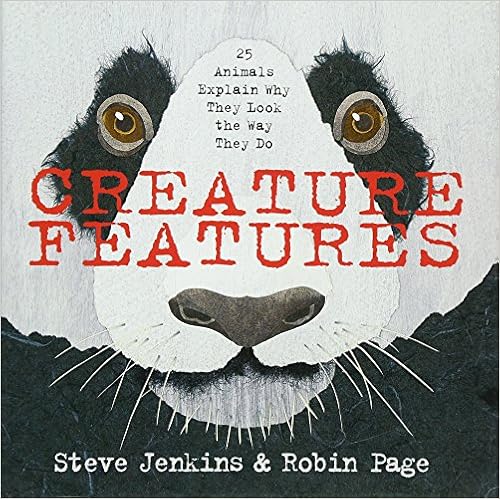
Booklist recommends pairing with Jenkins & Page's Creature Features . This title explores what makes various animals features unique and helps them adapt to their environments.  This title is not as much of a comparison, but rather complements by digging deeper into what various animals eat and where they live and why they may look strange.


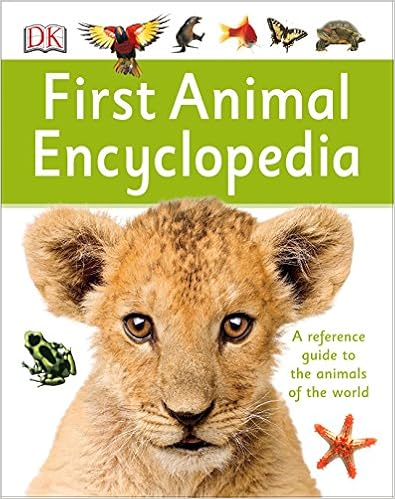
Fur, Feather, Fin provides a rhyming overview of the various animal kingdoms, but does not dig deep into the myriads of animals in those kingdoms.  The First Animal Encyclopedia would provide the details.  This encyclopedia is age appropriate and uses actual photographs to explore the various animal kingdoms.  Again this title would make a nice companion.


SUGGESTED USES: Fur, Feather, Fin would definitely be an excellent read-a-loud to the class to prompt animal discussions.  In Indiana first graders are asked to describe the unique and commonalities organisms have.  In second grade students learn about the variations in physical features living organisms have.  In third grade students explore how animals internal and external structures support survival, etc. This title discusses what makes the various living creatures alike and different.  After reading this title I would have my students each choose a kingdom/type of animal and research in-depth the various characteristics (habitat, foods, prey, babies) this kingdom has. The following Indiana State Standards could be addressed using this book:

1.LS.1 Develop representations to describe that organisms have unique and diverse life cycles but all have in common birth, growth, reproduction, and death.
1.LS.3 Make observations of plants and animals to compare the diversity of life in different habitats.
1.LS.4 Use a model to represent the relationship between the needs of different plants and animals (including humans) and the places they live
2.LS.2 Compare and contrast details of body plans and structures within the life cycles of plants and animals.
2.LS.3 Classify living organisms according to variations in specific physical features (i.e. body coverings, appendages) and describe how those features may provide an advantage for survival in different environments
3.LS.1 Analyze evidence that plants and animals have traits inherited from parents and that variation of these traits exists in a group of similar organisms.
3.LS.3 Construct an argument that plants and animals have internal and external structures that function to support survival, growth, behavior, and reproduction.


Sunday, September 2, 2018

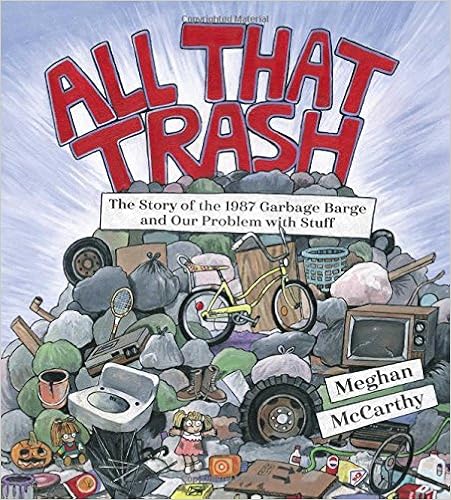
ALL THAT TRASH: The Story of the 1987 Garbage Barge and Our Problem with Stuff

Title: ALL THAT TRASH: The Story of the 1987 Garbage Barge and Our Problem with Stuff
Author: Meghan McCarthy
Publisher: A Paula Wiseman Book-Simon & Schuster
Copyright: February 27, 2018  
ISBN: 978-1-4814-7752-9
Age Range: 4-8 (publisher's note)
Reading Level: Accelerated Reader- IL: LG, BL: 5, AR Pts: 0.5 
Cost: $17.99
Pages: 48


SUMMARY: Award winning author/illustrator of Earmuff's for Everyone, Meghan McCarthy, is back with a stinky true story of the garbage barge that started an environmental movement.  If you were born after 1987 you may have never heard of Mobro 4000 the garbage barge carrying 3,186 tons of trash from New York.  "Stinky, smelly, and no one wanted it." This is the premise for the true story about a full garbage barge that was turned away from each port it stopped at whether North Carolina, Alabama, Mississippi, Louisiana, and even Mexico.  The problem began when Lowell Harrelson got wind, perhaps a little stinky, that a New York landfill was almost out of room. Harrelson agreed to take the garbage with the idea of harnessing energy from the methane gas produced from decomposing trash.  The problem was everyone thought the barge was an environmental hazard and did not want it to make land.  For months the barge traveled out at sea till finally a judge ordered the trash to be burned.  McCarthy uses painted illustrations and narrative format to guide the reader through the barge's journey.  The story includes quotes from the many people involved in the fiasco and a brief nod to Greenpeace.  The book takes a lighthearted approach with the content and illustrations.  One always needs reminders of where our trash really goes, and what we can do about it.

CRITIQUE:  While this is not the first children's book to take on the "Garbage Barge" story, it does take a different approach utilizing direct quotes and provides extensive background information. The title definitely stands out and draws the reader in.  The comical caricatures keep the story fresh and appealing. This book has not won any official awards, but drew a starred review from the School Library Journal. I do agree with Publisher's Weekly review stating "the discussion of America's problem with stuff, as referenced in the subtitle, is relegated to the extensive back matter."  While I do appreciate the extensive back matter at the end of the book it would have been nice to address our problem with stuff in the story narration.  This book would be an excellent resource for teachers and parents who want children to understand where trash goes and why too much of it is a problem.

“The year was 1987 and a ship full of trash was about to become famous…The narrative is immensely readable…A fresh take on a story of old garbage guaranteed to spark conversations and a desire for actions among students. Highly recommended.” —School Library Journal (starred review)

FEATURES INCLUDED:  Photos of the Break of Dawn (tugboat) and barge, Garbage Barge Facts, Recycling Facts, Garbage Facts, Ocean Garbage Facts, photo examples of recycled materials, and Select Bibliography appear at the end of the story.  For a complete bibliography and further information you can visit: meghan-mccarthy.com/allthattrash.html

EXAMPLES:
 Here you can see McCarthy's charming cartoon like illustrations with all things 1980's.  Children will get a kick out of seeing old boom boxes, a Walkman, old TV, and vintage toys.  Limited words on the pages also keeps the story short and just the facts.
 "NEXT TIME...TRY RECYCLING" is the ultimate takeaway from the book.  McCarthy utilizes two page spreads routinely to beautifully illustrate this stinky tale.
At the end of the book McCarthy provides background information from the tug boat captain Duffy St. Pierre as well as facts about the barge, recycling, garbage, and ocean garbage.


COMPARISONS/RECOMMENDED READING:

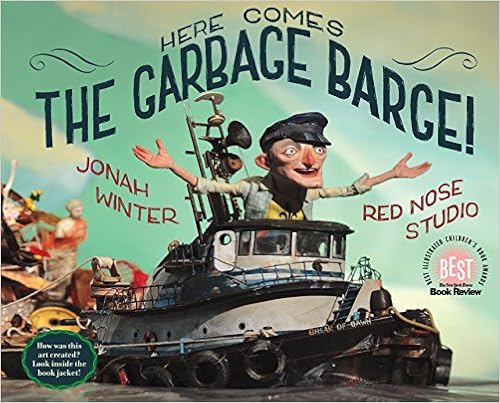
Jonah Winter and Red Nose Studio's Here Comes The Garbage Barge , a New York Times Best Illustrated book of 2010, Huffington Post Best Book of the Year, and a School Library Journal Best Book of the Year, covers the same topic as All That Trash. The illustrations are amazing; however, the book is considered "mostly true," and does not provide extensive historical background the book above does.  It also took some liberties when retelling the tale.  Using both books could be beneficial.


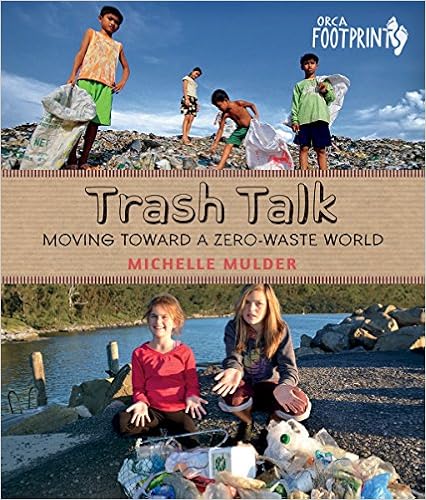
Trash Talk: Moving Toward a Zero Waste World discusses what we can do with all the trash we generate daily.  This book would make a nice companion story in discussing ways landfills have been used in the past, and what ways people around the globe are dealing with waste looking towards the future.


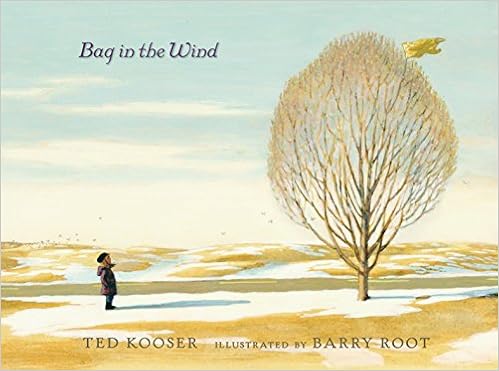
Travel along with Bag in the Wind as a plastic bag blows away from a landfill and is reused time and again. This environmental story would pair nicely with All That Trash as a companion read in discussing how items can be reused.


SUGGESTED USES: All That Trash would be an excellent resource for schools when teaching about recycling, environmental conservation, and sparking discussions on lifestyle changes.  If I was still teaching science I would have my students track where their current trash goes, what landfills are in the area, and discuss ways they could reduce their impact on the environment.

This book would aid in teaching the following Indiana State Standards:
K.ESS.4 Communicate solutions that will reduce the impact of humans on the land, water, air, and/or other living things in the local environment.
1.ESS.4 Develop solutions that could be implemented to reduce the impact of humans on the land, water, air, and/or other living things in the local environment.
4.ESS.4 Develop solutions that could be implemented to reduce the impact of humans on the natural environment and the natural environment on humans.
5.ESS.3 Investigate ways individual communities within the United States protect the Earth's resources and environment.